
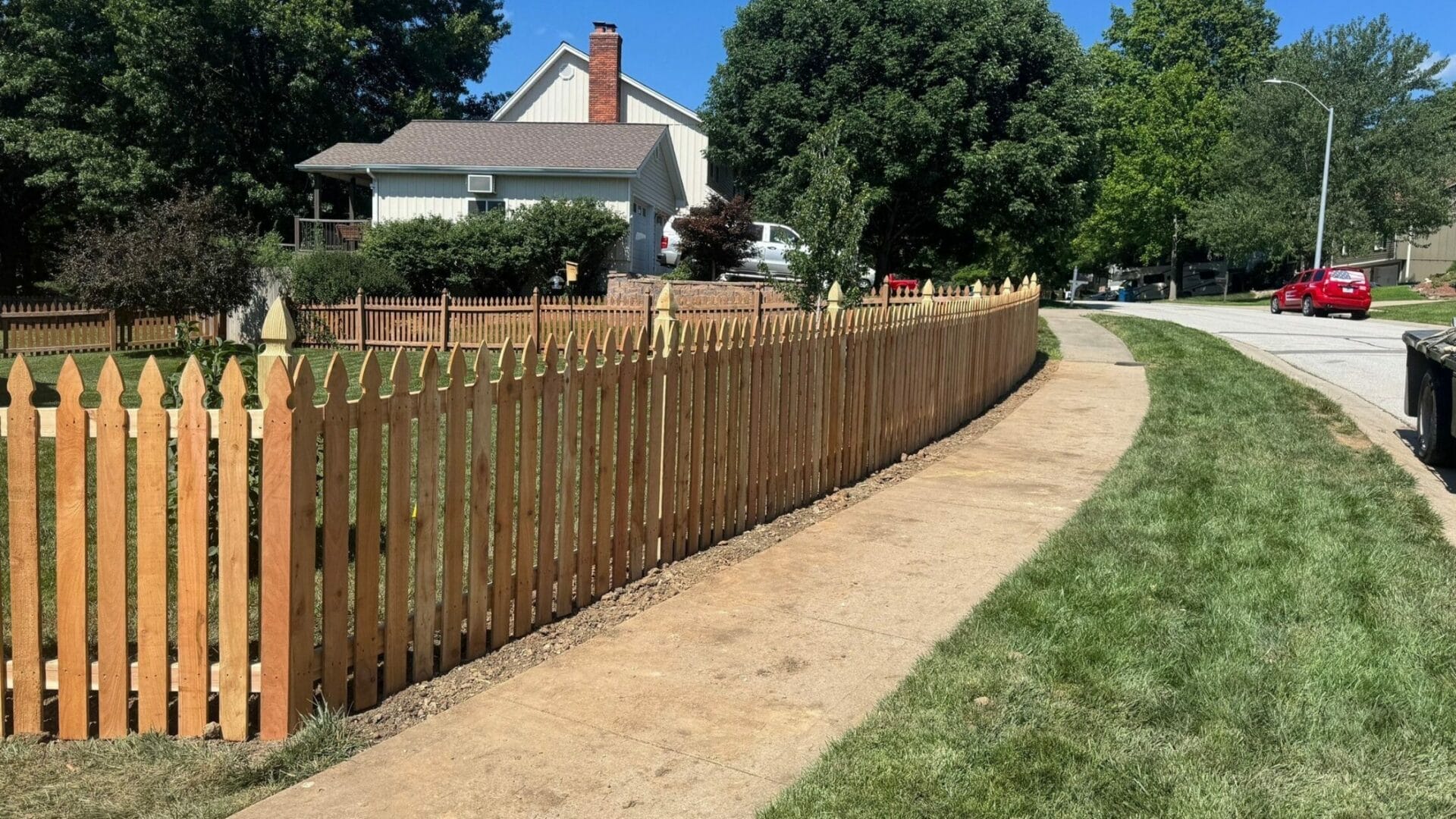
Once you have settled on a fence style, the next decision is the one that determines how long your investment holds up. Wood species affects maintenance frequency, lifespan, and total cost of ownership more than most homeowners expect. If you are still weighing fence styles, start with our guide to wood fence styles for Kansas City homeowners first, then come back here.
Kansas City’s climate puts real stress on exterior wood. Hot, humid summers followed by winters with 100 or more freeze-thaw cycles mean the species you choose either handles that punishment well or shows its weakness within the first few years.
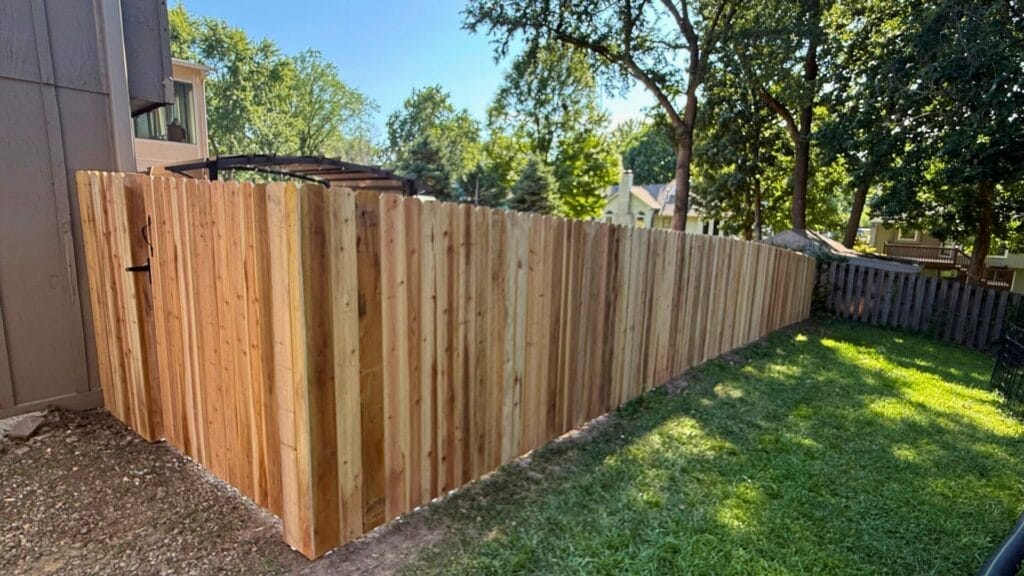
Cedar: the balanced choice for most residential fences
Cedar’s natural oils resist rot and insects without chemical treatment, making it the most practical choice for most Kansas City homeowners. With proper sealing every two to three years, expect 20 to 30 years of solid service. It handles Midwest freeze-thaw cycles well and ages to a silver-gray if left unsealed, a look some homeowners actually prefer. Mid-range upfront cost and low lifetime maintenance make cedar the default recommendation for the majority of residential boundary fence projects. For more on cedar longevity, see this resource on how long a cedar fence lasts.
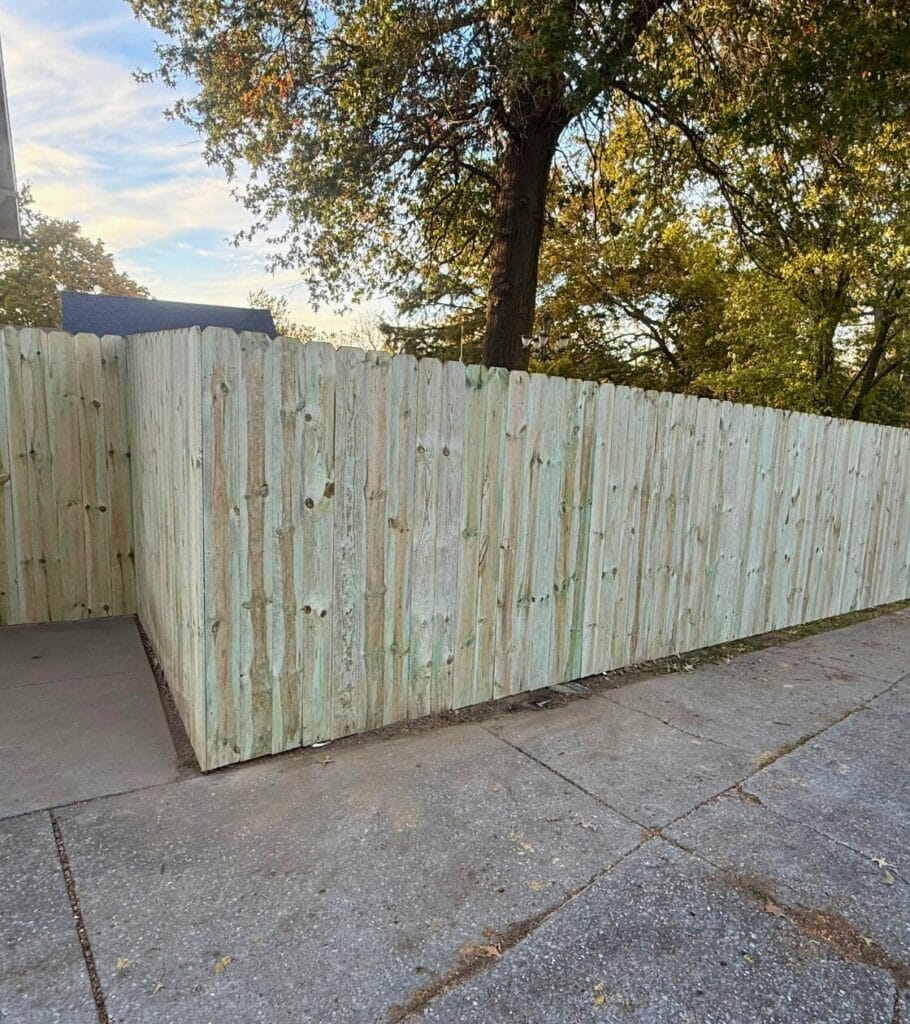
Pressure-treated pine: the budget-conscious option with trade-offs
Pressure-treated pine is typically the most affordable option. The chemical treatment extends rot resistance and can deliver a 20 to 30 year lifespan when sealed annually or every two years. The downside is real: pine is prone to warping and cracking in dry heat if maintenance lapses. It is the right call for budget-focused projects, but only if consistent upkeep is genuinely part of the plan, not just the intention.

Redwood: premium durability for long-term installations
Redwood offers 25 to 40-plus years of service with minimal maintenance, making it the highest-performing wood option available. It performs especially well in high-moisture environments, which matters for Kansas City properties in low-lying areas or near drainage corridors. The upfront cost is higher, but for homeowners who want to install a fence once and not revisit the decision for decades, redwood earns its price.
Property lines, height limits, and permits: what to sort out before you dig
The most common fence installation mistakes have nothing to do with style or wood choice. They happen before the first post goes in the ground: the wrong location, the wrong height, or a missed HOA approval. Getting these details right before ordering materials prevents expensive corrections later.
Standard height rules by yard location
Most residential municipalities restrict front yard fences to 3 to 4 feet and backyard fences to 6 feet, with some allowing up to 8 feet by permit or variance. In Kansas City, Missouri proper, standard wood privacy fences within those height limits generally do not require a building permit under KCMO’s exempt-work guidelines, but you still need to comply with setback and easement rules. On the Kansas side of the metro, Johnson County municipalities generally cap front yard fences at 4 feet and rear yard fences at 6 feet, with chain-link and barbed wire prohibited in street-facing locations. For any fence project outside those standard dimensions, contact your local building department first. A permit for non-standard work is available, and the fees vary by jurisdiction.
What HOA rules typically restrict for wood fences
HOAs commonly require pre-approval through an Architectural Review Board before any fence installation begins. They frequently restrict chain-link and barbed wire outright and often cap fence heights lower than local code permits. Some HOAs specify approved wood species, stain colors, or require that the finished side face the street or the neighbor’s yard. Review your HOA bylaws before selecting a style, discovering a restriction after materials are ordered is a costly problem to fix. When the property line location is unclear, a private survey costing $300 to $800 is money well spent before any post hole is dug.
Why installation quality determines how long your fence holds up
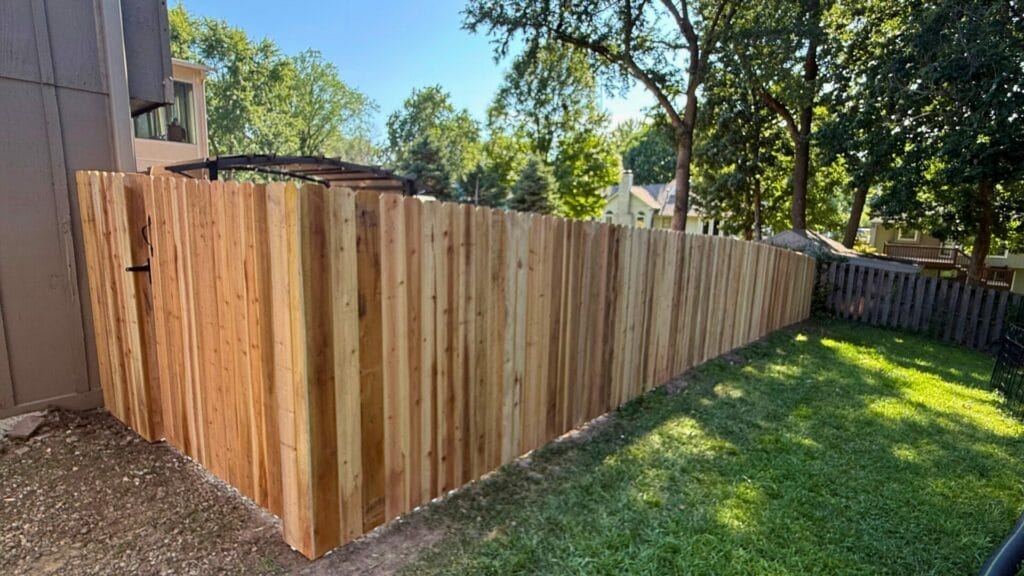
Every conversation about fence styles eventually comes back to the same point: how the fence is installed matters as much as what it is made of. Poor footings and inadequate post depth can shorten a cedar board-on-board fence’s service life by many years; the same fence installed correctly commonly lasts multiple decades. The difference lies entirely in the installation crew’s knowledge and consistency.
Post spacing and panel alignment: where most fences fail early
Inconsistent post spacing is the leading cause of fence lean and sag within the first five years. Posts set too far apart place undue stress on rails and panels, and that stress compounds through every Kansas City freeze-thaw cycle. Panel alignment errors follow the same pattern: what looks close enough at installation becomes visibly wrong after a few seasons of wood expansion and contraction. These are structural failures, not cosmetic ones, and they directly determine whether a fence lasts 10 years or far longer.
In Kansas City’s clay-heavy soils, posts for a 6-foot privacy fence should be set between 24 and 36 inches deep, depending on site conditions, since the local frost line commonly reaches 26 to 30 inches. Verify the required depth with your local building department before digging, as codes vary across the metro. A gravel base of 4 to 6 inches at the bottom improves drainage in clay soil, which holds moisture and can accelerate post rot when drainage is ignored.
How a consistent, trained crew raises the quality bar
When crew composition changes from job to job, the standard model for companies that rely on subcontractors, spacing, and depth standards tends to vary from installer to installer. A consistent, trained crew enforces those standards more reliably across every project, because every installer has practiced the same procedures across hundreds of installations. At Kansas City Top Tier Exteriors, post depth, concrete cure time, panel sequence, and gate alignment are not improvised. They are part of a repeatable process, and that consistency is what holds up through Midwest winters, not just the wood or the style you choose.
Matching style to property and taking the next steps
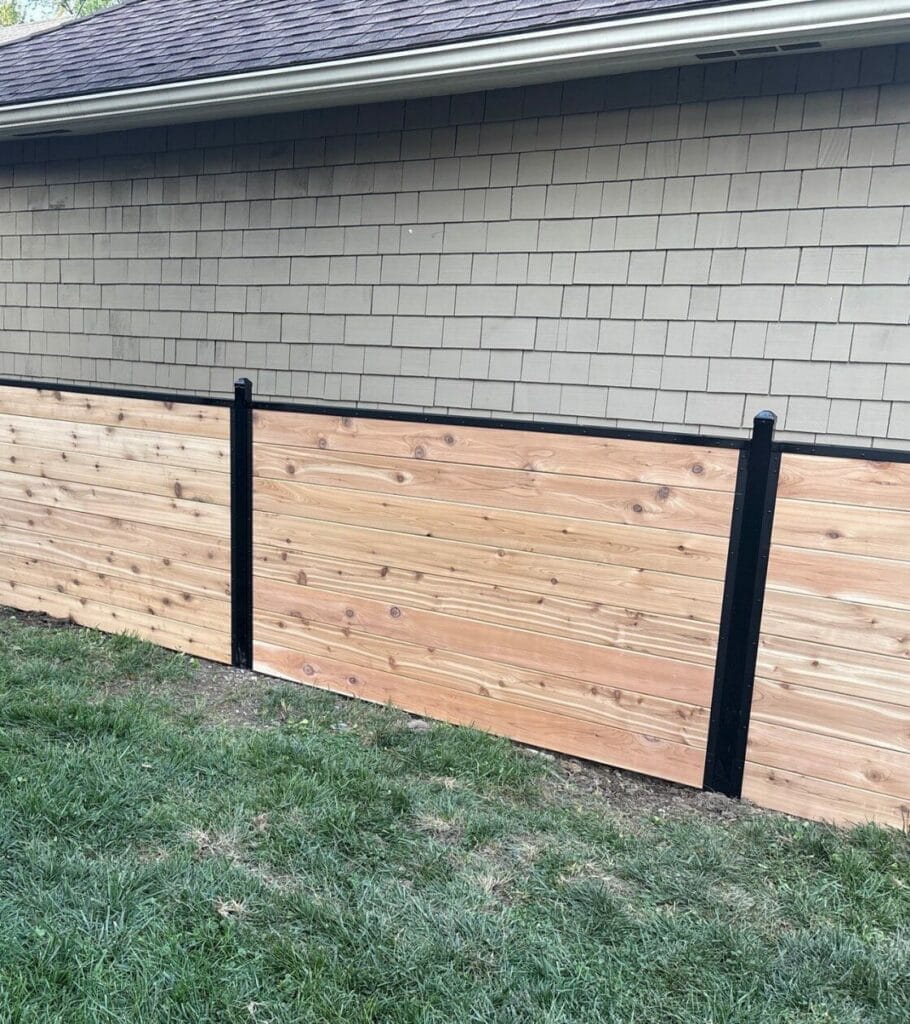
Open styles like picket and split-rail define boundaries, boost curb appeal, and suit front yards or large lots where enclosure is not the goal. Privacy styles like board-on-board and shadowbox handle backyards, pool areas, and any property where seclusion and security are the priority. Shadowbox earns its place when airflow, wind resistance, or a clean look on both sides of the fence matter to you or your neighbor, see our wood shadow box fencing portfolio for examples of that approach in local yards.
Wood species choice shapes both upfront cost and long-term maintenance schedule. Cedar is the practical choice for most residential projects in the Kansas City metro. Pressure-treated pine works for budget-focused installations when consistent maintenance is realistic. Redwood rewards homeowners who want maximum longevity with minimal upkeep. Whatever style and species you land on, confirm your property lines, check local height regulations, and review HOA requirements before any materials are ordered.
Once you have compared your options side by side, most homeowners find the style decision comes together fairly quickly. The longer-term investment is in finding an installer who builds every fence the same way, right post depth, proper footings, and consistent craftsmanship from start to finish. If you are ready to talk through your property and shortlist the right options, reach out to KCTTE for a free on-site estimate. We will measure the line, walk the yard, and give you a straight answer on what fits your property and your budget.
Choosing the Right Wood for your Fence: Cedar, Pine, or Redwood was last modified: May 12th, 2026 by