
When comparing different wood fence styles for property boundaries, most homeowners hit the same wall: what exactly is the difference between a board-on-board and a shadowbox fence, and does it actually matter for your backyard? With decades of local experience installing wood fences across the Kansas City metro, we can tell you it matters more than most people realize, and the wrong choice leads to real regret. This guide walks through the main wood fence styles used for property boundaries and what you need to handle before a single post goes in the ground.
What the most popular wood fence styles actually look like in a yard
The four styles homeowners compare most often are picket, board-on-board, shadowbox, and split-rail. Each solves a different problem, and each looks very different once it is standing on your property line. Here is how to picture each one clearly before you commit to anything.

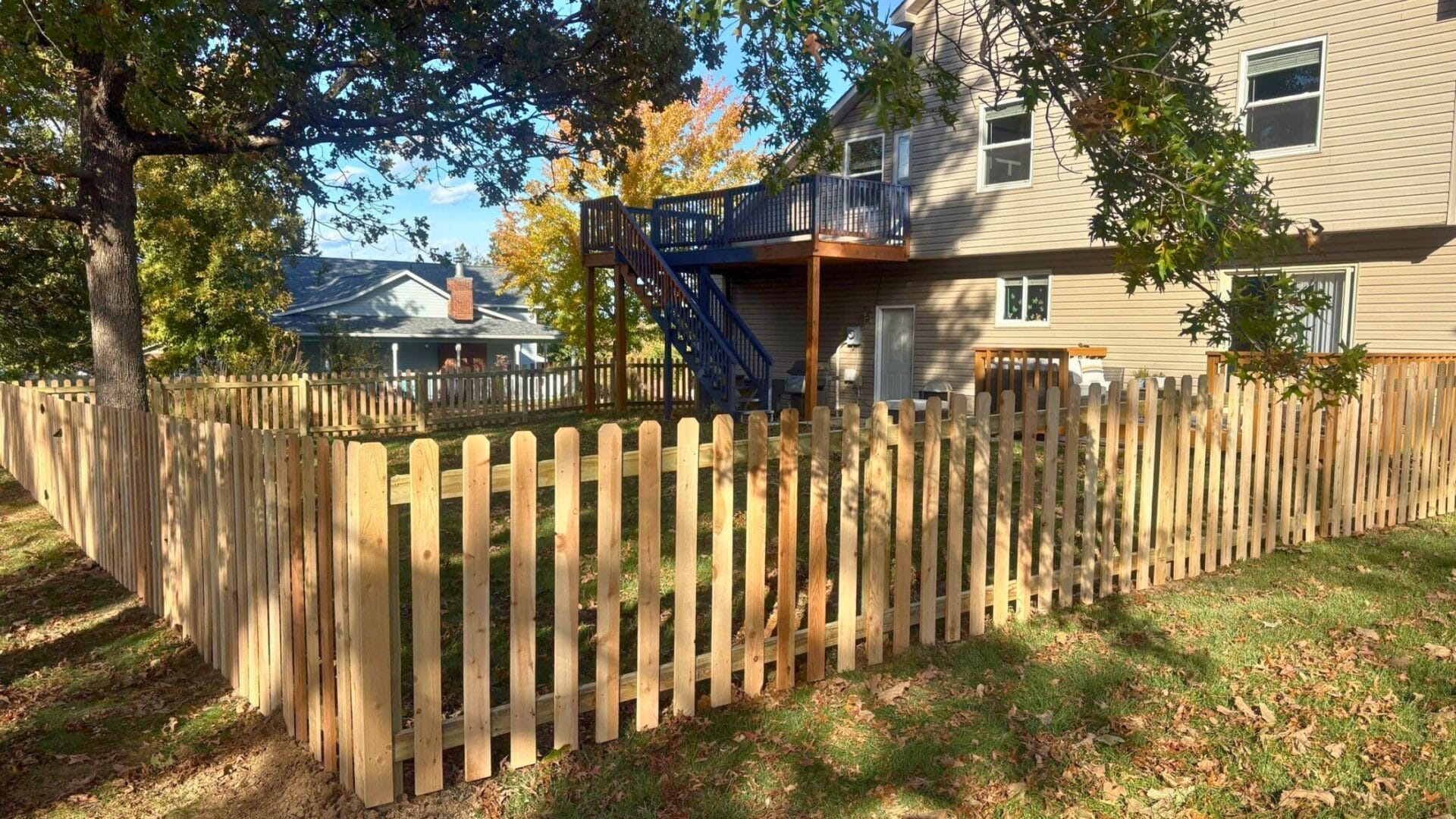
Picket fences: classic curb appeal with open boundaries
A picket fence uses spaced vertical boards attached to horizontal rails, typically standing 4 to 5 feet tall. The tops are either pointed or dog-eared, and the gaps between boards are intentional. This style works best for front yards, street-facing property lines, and anywhere you want to define your boundary clearly without enclosing the space. It pairs well with landscaping and gives a home strong curb appeal without making the yard feel boxed in.
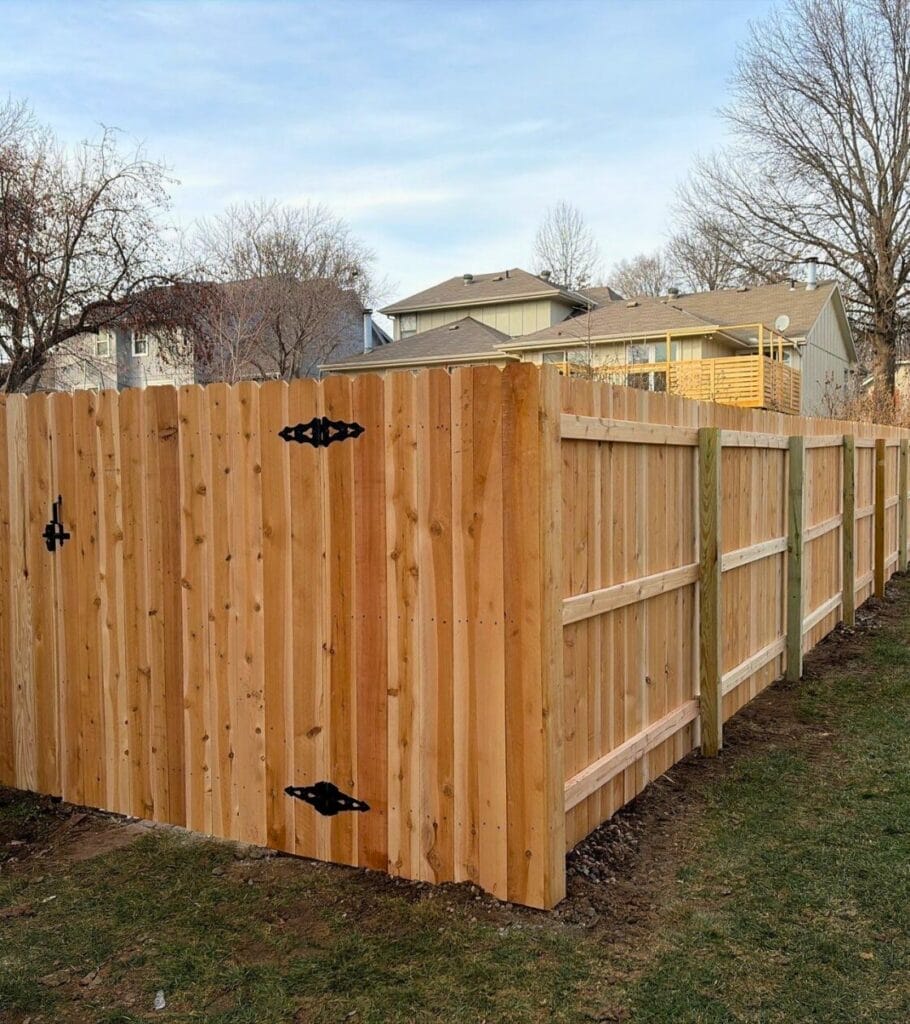
Privacy and board-on-board: full enclosure that faces both neighbors
Board-on-board fencing runs overlapping vertical boards along one side of the horizontal rails, so there are no visible gaps when viewed straight-on. It typically stands 6 to 8 feet tall and blocks 98 to 100 percent of sightlines. This is the go-to choice for backyard boundaries, pool enclosures, and any situation where genuine seclusion is the priority. Because both the front and back have a clean finished appearance, it is also called a good neighbor fence.

Shadowbox: the airflow-friendly middle ground
A shadowbox fence alternates boards on both sides of the horizontal rails, with small gaps on each side that the opposing boards cover. Viewed straight-on from either direction, it looks nearly solid. Viewed at an angle, you can see through. This design allows meaningful airflow, which matters on Kansas City properties with wind exposure or high humidity. It is also an honest choice for shared boundary lines since both sides look equally finished.

Split-rail: open boundaries for rural and suburban lots
Split-rail fencing uses two or three horizontal rails running between notched posts, with no boards filling the space between them. It is completely open and defines a boundary without enclosing it. Larger lots, rural-style properties, and front acreage are where this style belongs. Adding welded wire mesh to the back side converts it into a functional pet containment fence at a modest added cost, which is a common request for properties with dogs.

Comparing wood fence styles for property boundaries: privacy, security, and pet containment
Style determines the look, but function determines whether that look solves your actual problem. Before you settle on a design, it is worth being direct about what each style actually delivers when it comes to blocking views, deterring entry, and keeping pets where they belong.
Full-privacy styles: board-on-board, tongue-and-groove, and stockade compared
Board-on-board and tongue-and-groove fences block 95 to 100 percent of visibility and present the highest security deterrence of any wood fence style. The dense coverage limits grip points, and the height alone discourages casual entry. These are the right choices for homeowners with kids, dogs, or a genuine need for seclusion. The trade-off is that solid panels trap more moisture, which means maintenance frequency matters more for these styles than for open designs. For real project examples, see our privacy fencing gallery.
Shadowbox and partial-privacy designs: what they block and what they let through
Shadowbox fences block 80 to 95 percent of direct sightlines while allowing meaningful airflow through the alternating board gaps. They contain standard-sized pets well and deter casual foot traffic. Small gaps do exist at certain angles, so if absolute privacy is non-negotiable, shadowbox is the compromise choice, not the final answer. Lattice-top combinations, where a solid base meets an open lattice section along the top, fall into the same partial-privacy category and add decorative character.
Open styles and what they actually define
Picket and split-rail fences signal property lines clearly to neighbors, delivery workers, and service crews. They offer minimal security compared with solid privacy fences, and open styles generally do not contain small pets without added wire or mesh. What they do well is establish a visual boundary without creating the enclosed feeling that taller privacy styles produce. If pet containment is needed with a split-rail design, adding welded wire mesh to the inside face solves the problem at a fraction of the cost of converting to a full privacy build. For examples of decorative treatments and curb-appeal builds, review our decorative wood fencing gallery.
What the most popular wood fence styles actually look like in a yard
The four styles homeowners compare most often are picket, board-on-board, shadowbox, and split-rail. Each solves a different problem, and each looks very different once it is standing on your property line. Here is how to picture each one clearly before you commit to anything.
Picket fences: classic curb appeal with open boundaries
A picket fence uses spaced vertical boards attached to horizontal rails, typically standing 4 to 5 feet tall. The tops are either pointed or dog-eared, and the gaps between boards are intentional. This style works best for front yards, street-facing property lines, and anywhere you want to define your boundary clearly without enclosing the space. It pairs well with landscaping and gives a home strong curb appeal without making the yard feel boxed in.
Privacy and board-on-board: full enclosure that faces both neighbors
Board-on-board fencing runs overlapping vertical boards along one side of the horizontal rails, so there are no visible gaps when viewed straight-on. It typically stands 6 to 8 feet tall and blocks 98 to 100 percent of sightlines. This is the go-to choice for backyard boundaries, pool enclosures, and any situation where genuine seclusion is the priority. Because both the front and back have a clean finished appearance, it is also called a good neighbor fence.
Shadowbox: the airflow-friendly middle ground
A shadowbox fence alternates boards on both sides of the horizontal rails, with small gaps on each side that the opposing boards cover. Viewed straight-on from either direction, it looks nearly solid. Viewed at an angle, you can see through. This design allows meaningful airflow, which matters on Kansas City properties with wind exposure or high humidity. It is also an honest choice for shared boundary lines since both sides look equally finished.
Split-rail: open boundaries for rural and suburban lots
Split-rail fencing uses two or three horizontal rails running between notched posts, with no boards filling the space between them. It is completely open and defines a boundary without enclosing it. Larger lots, rural-style properties, and front acreage are where this style belongs. Adding welded wire mesh to the back side converts it into a functional pet containment fence at a modest added cost, which is a common request for properties with dogs.
What comes next: choosing the right wood for your fence
Once you have settled on a style, the next decision is the wood fence material itself, and it is one that most homeowners underestimate. The wood materials you choose affect how long your fence lasts, how much maintenance it needs, and how it holds up through Kansas City’s freeze-thaw winters and humid summers. Cedar, pine, redwood, and composite wood options all behave differently over time and carry different price points.
Ready to move forward?
If you have a style in mind and want to know what it looks like installed on a property like yours, we are happy to walk through it with you. KC Top Tier Exteriors has been helping Kansas City homeowners make confident fencing decisions for more than 25 years. Request a free estimate, and we will come out, look at your property, and give you straight answers.
Best Wood Fence Styles to Define Your Property was last modified: July 8th, 2026 by